Blowfish.

Blowfish.
The inspiration.
Showing posts with label Topics. Show all posts

21 March 2010

Topics: Snacks in Korea

There are many snacks in Korea that I’ve never considered snacks before. I’ve been offered all of the following:

A cup of tiny tomatoes.


Squishy, slimy rice cakes with or without stuff in them. (They take like 5 hours to chew.)

Dried black beans.


Dried “cuddlefish” which is like a squid, and is disgusting.


There are many different types of dried fish for sale. They all seem gross to me.


Not popcorn, but popbean.

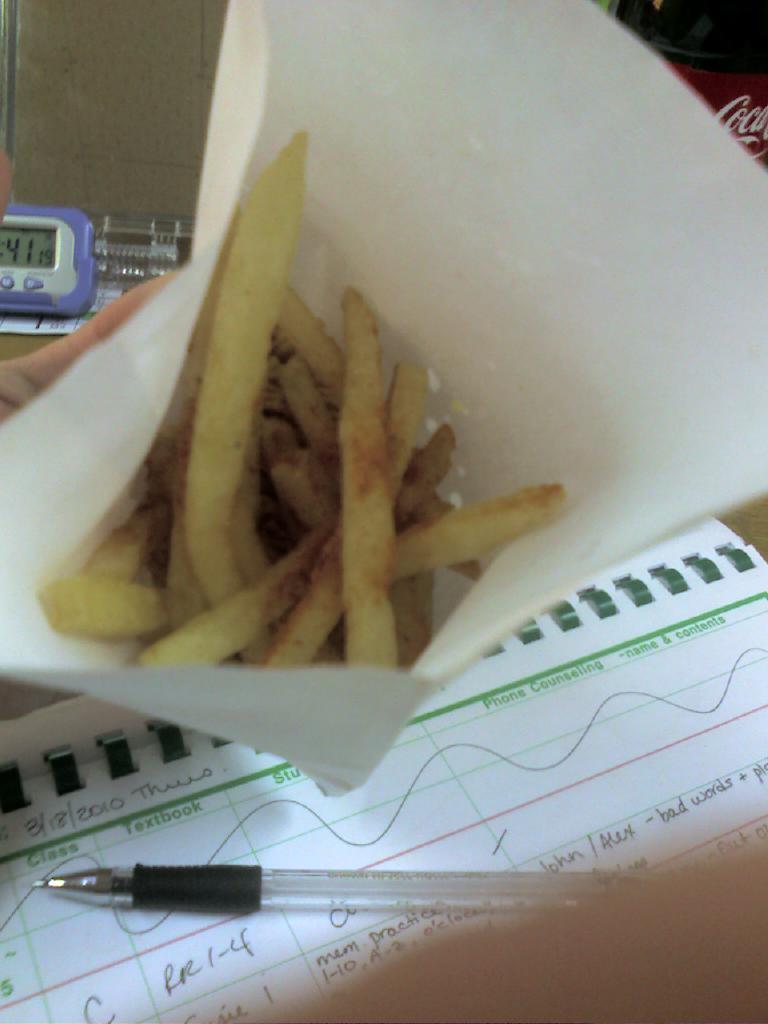
Cold french fries, with ramen-type powdered spices.


Cold tater tots.


Dry, broken ramen noodles, with ramen spices.


Boiled potatoes- Small or big, regular or sweet potatoes- No salt or flavoring, just eat plain boiled potatoes, often on a toothpick.

I’ve frequently seen, but never been offered, roasted bugs. They look like shell-less cockroaches, and smell worse than anything on Earth. I’m told they’re a type of silk worm. Ewww.


I’ve also seen chestnuts roasted on a (not) open fire. It’s nice to see at Christmas, but I’m sure how they taste.

I also saw roasted acorns at the Maehwa Festival. Didn't try them. But I like the picture.


I’ve seen other oddities too. Like green tea cake. I didn't even know cake came in this color option.

01 March 2010

Topics: Punctuality in Korea

Before journeying here, I was told that punctuality was extremely important to Koreans. “You must never be late!” they said. I took this to heart. But I took it to mean that everyone is expected to be on time. This is not the case. What they meant- what they forgot to add to that warning- was that “a foreigner’s punctuality is very important to Koreans.” They don’t care one bit about whether the Korean teachers are on time.

I was late twice in my first month; once because I got lost, and once because I was crying uncontrollably at the thought of going to that place again, and decided it was better to be late and composed, than a sobbing mess when I arrived. (It didn’t work, as I started crying again after I got there.) I was severely reprimanded, treated like a pariah all day, and tons of work was added to my day.

I haven’t been late since. However, every day I arrive to work 5-10 minutes early, only to have to wait in the cold for 10 minutes or more until the Korean teachers (with the keys) finally show up. (I am not trusted with a key.)

Every day, the others come between 5-15 minutes late. The teacher at the academy next door hates to see me standing in the unheated hallway, so she insists that I come into her school to wait. It’s the warmest I am all day. (See: Heating, and Other Things I Miss at Work) And she always makes me a cup of delicious tea while I wait. Maybe I should work there. ;)

27 February 2010

Topics: Sick Days

The standard allotment of sick days given to foreign teachers at a hagwon (private academy) is 3 days for the whole year. They don’t last long if you are very ill even once. But it can be very difficult to take them at all.

Koreans have a different view of illness and missing work. They aren’t given any sick days at all, even when foreigners in the same position have them. They are expected to be at work even if they are extremely ill. Only hospitalization and major surgery would be good enough excuses for being absent. So many people here think that having 3 paid sick days is very generous.

Because of this ideal, when you call in sick, they are very reluctant to accept your reasoning. They will usually try to talk you out of missing the day using Korean reasoning (?) and guilt. If these don’t work, as with my first illness, I was told my director was coming over to get me and take me to a doctor. It was under the guise of helping me to get well, but I knew she wanted proof that I was actually sick. And she got it.

I was only able to stay home and rest because the doctor told her that I needed to do so. The second time I was sick, I went to work for several days so they could witness my downward spiral. Once they were convinced, it was them who told me to go home. I hope that they learned that I don’t just pretend to be sick. If I am truly too sick to work, and need to rest to get better, that’s when I will use my sick days, and not before.

25 February 2010

Topics: Sickness and Health Care in Korea

During Part 1 of my Korean adventure, I was very, very ill twice. Both times the cold/flu/cough/illness/earaches lasted up to one full month. I’ve had many friends tell me that during their first year here they were often very sick also. There must be something about so drastically changing your environment that causes this. There’s a new climate, new germs, and a new way of thinking about health care.

When I was very sick in October, I was starting to be desperately ill, and my director’s wife took me to the “hospital” to see “a famous internal” (doctor). We were told the wait would be one hour, which made my boss very frustrated (that it would take so long), and made me very surprised (that it would be so short for a same-day walk-in). In the meantime, she insisted on taking me to a restaurant to eat some spicy soup. She said that spicy foods are supposed to help fight illness. She also insisted that I drink only hot water or tea, and not cold water, when I’m sick. She said it soothes the throat and is easier for the body to handle while it’s fighting the illness.

We saw the doctor a short while later. I wrote my long list of symptoms in Korean (from my Lonely Planet Korean phrasebook), and my boss talked to the doctor on my behalf. He spoke no English, but I could understand his motions to open my mouth when he wanted to stick the biggest tongue depressor I’ve ever seen into it. It was huge, metal, and unsanitized. Maybe it was before he used it on me (I doubt it), but it went back into the can afterward, to be used again.

Then I was instructed to go behind a curtain with a girl. I asked what was happening, and my boss said, “shot.” Lovely. I loathe shots. But this girl was very fast and efficient, and to alleviate any pain and make the fluid move around faster, she smacked my butt as she administered it. It was odd. No one ever told me what it was, but it was yellow, so maybe it was a vitamin shot?

He gave us a prescription, and we went to the front desk to pay. I was shocked that the bill was 13,000 won, or about $12 USD. Since I didn’t have insurance yet, this was actually the entire cost. We went downstairs to the pharmacy where we got a cocktail of pills in packets, separated for breakfast, lunch, and dinner. There were like 4-6 pills in each packet, plus I was given the thinnest cough syrup I’ve ever seen. The total for my “medicine” was 15,000 won. None of it worked at all, but at least it was cheap and tasted okay.


During our visit, my boss was instructed that I needed to rest and get well or I would get much worse. Otherwise, I would not have been allowed to use my sick days. More on sick days later. I went home to sleep. I spent the next 3 days sleeping and watching movies.

The last week in December was my vacation. The last few days I was starting to get sick, and by my first day back I was really ill. I had no choice but to go to work though, because otherwise they would have thought I was trying to extend my vacation. They wouldn’t have believed I was actually sick. I wouldn’t believe someone with that kind of timing, so I went to work.

Day by day I got sicker and sicker. My director spent the entire day on Wednesday at the same school as me (which is very rare), and when I saw him briefly the next day, he was also very sick. He saw me and yelled at his wife (in Korean), “Why is she here? Get her out of here! She will get everyone sick!” So she came over to me and told me we were leaving. It’s a shame showed up at work at 8:30pm. I could’ve used more than 30 minutes of leaving early. I had coughed to the point of vomiting many times that day. The next day I stayed home.

By the following Tuesday I was not improving, and maybe even getting worse. I called and said I wasn’t coming in again, and wanted to see another doctor. Jeff came down to get me and we went to the actual hospital nearby. It took longer to provide my insurance information over the phone via Candy than the rest of the visit took. Once payment was guaranteed, the doctor saw us immediately and spoke a little English. I tried to explain that I grew up used to strong medicine and that I needed an antibiotic. He seemed incensed and told me that he was giving me medicine and he wanted me to take it, and not question his knowledge. He was offended that I would question anything, and I was offended that I wasn’t allowed to.

We went to the counter to pay our bill, which was a 13,000 won copay. Again, I thought that was cheap, and they thought it was exorbitant. We visited the pharmacy next, and even the pharmacist double-checked that the lengthy list was correct. She gave us more packets, this time with 8 pills per serving. I went back home to bed.

It was made clear to me that I was expected to return to work the next day. So I did. I didn’t get too much better, but maybe a little. The pills were finished in 4 days, and I took another downturn. My left ear closed up, and I could only hear echoes. It was so painful, and disorienting. A couple of days later I was taken to an ear, nose, and throat specialist. He was an Oriental Medicine ENT specialist, with lots of fancy equipment, but no real medicine. I was told I had an ear infection, sinus infection, and bronchitis (more or less). He put me on many machines of questionable effectiveness. We went to the pharmacy again, and got some more pills, and went to school.

My ear stayed closed and painful for one full month, to the day. I couldn’t lay on that side for very long, couldn’t listen to music with headphones in that ear, and couldn’t hear in that ear without them. Finally, by the first of February, it was over.

It was horrible. It took 4-5 weeks to get over something that would’ve been gone in 3 days at home. The experiences didn’t leave me with much faith in Korean “health care”. They are concerned more with prevention (diet and exercise) than with cures. I’ve been told that there are International Clinics in Daegu, close to downtown, but they are too far to get to and back before work since I’m so far from town. Maybe next time.

21 January 2010

Topics: Phone Charms

Koreans love their phone charms. Accessory stores are full of hundreds of them. I bought a white rabbit for my first (pink) phone, who guarded it. I also attached my subway/bus charm, which was extremely handy. Some people live in apartment buildings with scanner-lock front doors, so their “scan-key” charms go on their phones, too. Some are cute and cool, and some are crazy and inappropriate.

30 December 2009

Topics: Ages in Korea

In Korea, when you are born, you are 1. They don’t do 1 month, 2 months, 6 months, like we do. You’re just 1. At the start of the new (lunar) year, you are two, regardless of when your birthday is.

For example:
If you are born on January 1st, you are 1 the day you are born. At the beginning of the new lunar year (this year it was February 14th), you would turn 2. So a baby born on 1/1/10 would be 1 for six weeks, and then turn 2. The age wouldn’t change on January 1st, 2011 like it does at home; the child would be 2 until Lunar New Year’s 2011 (in March, I think).

One of the teachers I work with says she’s 32 and older than me, however she was born in December 1979, and I was born in May 1978. (I told her to move to the States and she’d get younger!) 

27 December 2009

Topics: Bathrooms in Korea

For those of you who are unaware, Korea still primarily has “squat toilets,” which are basically a ceramic hole in the ground that you “squat” over to do your business. As part of Korea’s rapid modernization over the last few decades, Western “sit-type” toilets have been installed in modern buildings, department stores, and restaurants catering to Western tourists and teachers. However, most older buildings (which are cheaper for hagwons to rent) have not been converted. They likely won’t be, as Koreans see a functional system already in place, and don’t see any need to “waste” the money. In a few decades when these buildings are demolished, the new builds will be modern. But I won’t be here.

There is a waste basket next to the toilet. This is for used paper. Yeah, I make the same face. After you finish…using the paper…if there is paper…you deposit it into the basket. Many people have told me that the plumbing systems weren’t designed for paper disposal, so those who use it must use the basket.

You may see the same two problems in the previous paragraph that I keep coming back to. 1. If poo will go down, surely biodegradable paper will. 2. Those who use it. Yeah, there are people who don’t. Which brings me to my next point. If you want toilet paper, you must bring it with you, as this is often another cost the building owners don’t want to take on. There are actually vending machines outside the bathrooms in subway stations and department stores that sell packets of tissue for your use. (They also sell other hygiene-related products, from breath mints to condoms.)

So you must enter the bathroom prepared.

After your toilet business in concluded, you go to the sink and use soap (of questionable effectiveness) and cold water to wash your hands. They don’t know what a “paper towel” is here, and are mostly appalled when you suggest a disposable hand-drying solution. So, often there is no way to dry yours hands except by wiping them on your dirty clothes. The really nice department stores like Dong-A and Debec have UV light or quick-air dryers, but at most places (including my schools) you are out of luck.

And how do you accomplish the “act” while using a squat toilet? There are two main skills you must master: balance and aim. In the absence of one or both of these skills, you must be able to remember to pull up your pant legs (while pulling down the rest), and not to wear sandals. :)

At my schools: